

visit website
Alamo Inn B&B, Birding & Outdoor Store
801 Main St ... Alamo, TX 78516 ... 956-782-9912
► The Yturria Brand at El Canelo Ranch
► Attracting Money to the Valley
► Can Wild Birds Survive in the Valley?
► Can we Attract More Birders to the Valley?
► Where to watch birds in the Valley?
► A Wildlife Filled Fall
► A Family Legacy
► A Night Out
► Why Do Folk Watch Birds?
► Honoring the Frank Yturria Family
► Visiting with Big Mama
► Mansion of Mud, Transformed
► Growing Money Trees
► Attracting Money to the Valley
► Can Wild Birds Survive in the Valley?
► Can we Attract More Birders to the Valley?
► Where to watch birds in the Valley?
► A Wildlife Filled Fall
► A Family Legacy
► A Night Out
► Why Do Folk Watch Birds?
► Honoring the Frank Yturria Family
► Visiting with Big Mama
► Mansion of Mud, Transformed
► Growing Money Trees
True Tales of a Valley Birder
A series of articles by Keith Hackland ... alamoinn@aol.comJune 2014 ...
The Yturria Brand at El Canelo Ranch
Who could have predicted that the Valley would have developed the way it has
done today? Probably only Francisco Yturria, the patriarch of the Valley.
It was his astute business acumen that opened this area to settlement and commerce, and developed the large ranches that launched the economy on the back
of cattle ranching.
Francisco Yturria ran the first banking business, was de facto realtor for land purchases by the large ranches (Yturria, King, Kennedy), and was the key backer bringing the railroad here, all accomplished over 100 years ago. Today his legacy is shared by his descendants, and benefits everyone who lives here. While he anticipated much of the Valley's development, could Francisco Yturria have foreseen the popularity and value of birding tourism, here? Probably not. He left that to one of his descendants, Monica Burdette.
Monica and husband Ray Burdette run El Canelo Ranch, a piece of the original Yturria Ranch. There, typical of Francisco Yturria's brand of business, they operate a diversified conservation ranch, running cattle, breeding genetically improved White-tail Deer, offering exclusive high end hunting, all topped off with exclusive birding. see website
Francisco Yturria ran the first banking business, was de facto realtor for land purchases by the large ranches (Yturria, King, Kennedy), and was the key backer bringing the railroad here, all accomplished over 100 years ago. Today his legacy is shared by his descendants, and benefits everyone who lives here. While he anticipated much of the Valley's development, could Francisco Yturria have foreseen the popularity and value of birding tourism, here? Probably not. He left that to one of his descendants, Monica Burdette.
Monica and husband Ray Burdette run El Canelo Ranch, a piece of the original Yturria Ranch. There, typical of Francisco Yturria's brand of business, they operate a diversified conservation ranch, running cattle, breeding genetically improved White-tail Deer, offering exclusive high end hunting, all topped off with exclusive birding. see website
In 1989 Monica opened The Inn at El
Canelo on their El Canelo Ranch in
Kenedy County, just North of Raymondville.
Monica is a pioneer. Hers is the first
and oldest Birding Bed and Breakfast in
the Valley. El Canelo Ranch is known
as the home of the Ferruginous Pygmy-
Owl in South Texas, when a pair nested
year after year in the garden at the Inn.
Birders flocked to the ranch to see it, and
Monica demonstrated to the world the
economic value to a land owner of caring
for a rare species and sharing it with
others who care. Birding fees of $35 per
person are typical for short stay ranch
birding. That pair of owls was viewed by
many thousands of birders. Do the math
and figure if caring and sharing birds
makes financial sense to land owners.
Not only does El Canelo protect its birds and bucks, it also protects rare plants found in the pastures. El Canelo Ranch was amongst the very first in the Valley decades ago to invite a birder and a botanist to catalogue the species on the ranch and to seek out rare species. This work resulted in the discovery on El Canelo Ranch of a new spurge (a small herb) plant species previously unknown to science. The El Canelo Ranch bird list and plant list is available for visitors. It has been my privilege to visit El Canelo Ranch and to guide birders
Not only does El Canelo protect its birds and bucks, it also protects rare plants found in the pastures. El Canelo Ranch was amongst the very first in the Valley decades ago to invite a birder and a botanist to catalogue the species on the ranch and to seek out rare species. This work resulted in the discovery on El Canelo Ranch of a new spurge (a small herb) plant species previously unknown to science. The El Canelo Ranch bird list and plant list is available for visitors. It has been my privilege to visit El Canelo Ranch and to guide birders
there. Here one can
see the birds of South Texas living their
lives as they always have, across the vast
ranchlands of South Texas.
Monica is an amazing gourmet cook,
having studied in France and elsewhere.
She produces delicious sumptuous
spreads for the Inn's guests. This month
she has published her first cookbook,
The Inn at El Canelo Cookbook. It offers
her secrets to her unique brand of South
Texas cooking on its 216 pages, interspersed
with stories and ranch photos
introducing each food section.
Bon apetit. Good birding.
Great Books referred to in this column:
The Inn at El Canelo Cookbook, Monica Burdette, $19.95 from The Inn at El Canelo PO Box 487, Raymondville, TX 78580 (mail a check for $21.60 including tax). Also available at Alamo Outdoor Store, 956.782.9912, Alamo, Texas
The Patriarch: The Remarkable Life and Extraordinary Time of Francisco Yturria by Frank Daniel Yturria published by UTB/TSC, Brownsville. Available at Alamo Outdoor Store, 956.782.9912, Alamo, Texas
Great Books referred to in this column:
The Inn at El Canelo Cookbook, Monica Burdette, $19.95 from The Inn at El Canelo PO Box 487, Raymondville, TX 78580 (mail a check for $21.60 including tax). Also available at Alamo Outdoor Store, 956.782.9912, Alamo, Texas
The Patriarch: The Remarkable Life and Extraordinary Time of Francisco Yturria by Frank Daniel Yturria published by UTB/TSC, Brownsville. Available at Alamo Outdoor Store, 956.782.9912, Alamo, Texas
When I was a child growing up, as it is for
most families with children, money was tight.
Sometimes I would dream about having a rich,
generous uncle or grandmother, who might take
a special liking to me, and share their wealth
with me, so that I could afford a chocolate bar
every day. As I grew older I realized that money
is not created by taking it from others. Money
is created through providing products and services
that people will buy.
There is a great example right here in the Valley.
We have inherited a resource that many
people from the U.S. and around the world
want to experience, and are willing to pay to
do so. In fact when Texas A&M University
researched it (study for South Texas Nature
Marketing co-op), they told us that people are
spending about half a billion dollars every year
in the Valley on this resource. Their spending
supports 6,600 jobs, and generates over sixty
seven million dollars in city, county and state
taxes.
What could be so valuable, that it generates
half a billion dollars a year here? What is it that
we have that brings people from around the
world?
Get ready to be amazed! It is our wild birds.
Yes, those birds that we see in our trees, singing
and nesting and foraging.
By good fortune, the Valley has inherited the
richest wild birds in U.S. In our four counties,
Cameron, Willacy, Hidalgo and Starr, we have
some 540 species, more than most U.S. states.
We have a hundred official hot spots for bird
watching, and thousands more informal hot
spots surrounding us.
Many ordinary Eastern North American birds
reside in the Valley. They are ordinary because
they are widely distributed in U.S., like the
mockingbird that sings in most of our yards.
The Valley is the northern limit for fifty species of tropical birds, we call Valley specialties. Specialties include some of our parrots, doves, woodpeckers, kingfishers, humming birds, flycatchers, night hawks, raptors, and water birds. Most of them reside here year round, though a few visit us in spring and summer. Then there are all our winter birds, that start arriving in October and leave in March. Because the Valley lies under major American migration routes, every month Neotropical migrants fly through the Valley. Neotropical means they are nearly tropical, tropical residents except that they nest in U.S. and Canada. These migrants peak in spring and fall.
The Valley is the northern limit for fifty species of tropical birds, we call Valley specialties. Specialties include some of our parrots, doves, woodpeckers, kingfishers, humming birds, flycatchers, night hawks, raptors, and water birds. Most of them reside here year round, though a few visit us in spring and summer. Then there are all our winter birds, that start arriving in October and leave in March. Because the Valley lies under major American migration routes, every month Neotropical migrants fly through the Valley. Neotropical means they are nearly tropical, tropical residents except that they nest in U.S. and Canada. These migrants peak in spring and fall.
Finally there is a group of rare birds, vagrants,
that are seen only occasionally.
This is a remarkable number and combination
of birds for one small spot on earth. Several
books have been published in the last six years
on the world's top birding places. Our Valley
is listed as one of these, in the top twenty to
thirty areas offering the richest bird watching
on earth.
What a remarkable resource for the Valley.
All we have to do is keep the birds here (how
do we do that?) and thousands of birders will
show up every year, spend money in our hotels,
restaurants, stores, gas stations, and birding
hot spots, sustaining thousands of jobs. Birders
represent 25% of tourists who visit the Valley.
Perhaps we could attract more birders (how do
we do that)? In future columns we'll explore
these questions.
Study referred to in this column:
Economic Impact of Nature Tourism on the Rio Grande Valley, Texas A&M University, April 2012. To see this report go to southtexasnature.org, click on Nature Reports, select the second one (it is a pdf file).
Study referred to in this column:
Economic Impact of Nature Tourism on the Rio Grande Valley, Texas A&M University, April 2012. To see this report go to southtexasnature.org, click on Nature Reports, select the second one (it is a pdf file).
As a young boy I enjoyed seeing the wonderful
finches and Australian parakeets two of
my older cousins kept in their aviaries. So it
was natural for me to ask my father if I could
keep birds, too, to study close at hand. His answer
was as unexpected to me, as it was wise.
"No", he said, "birds are meant to be wild. Enjoy
them out there." Our farm was a haven for a
beautiful array of wild bird life, so while I was
disappointed, I understood what he meant, and
I studied the wild birds.
Fifteen years later I noticed that the prolific
wild birdlife on our farm had dwindled as surrounding
farms ploughed up wild pasture and
brushland, blanketing their land with sugar
cane, and cleared roads, while other lands were
covered by encroaching houses. I felt helpless.
What could I do?
Today, living in the Valley, enjoying our wonderful wild birds, a natural resource that attracts half-a-billion dollars a year to the Valley in Nature Tourism dollars, I notice that our birdlife here is being affected, too, by expanding fields of sugar cane, growing cities, burgeoning roads and parking lots, droughts, and frenetic border activity on the banks of the Rio Grande. The old question comes back into my mind, what can we do? There is much that can be done. It starts with awareness and education. That work is being done well by birding centers around the Valley, by science teachers, and media.
Today, living in the Valley, enjoying our wonderful wild birds, a natural resource that attracts half-a-billion dollars a year to the Valley in Nature Tourism dollars, I notice that our birdlife here is being affected, too, by expanding fields of sugar cane, growing cities, burgeoning roads and parking lots, droughts, and frenetic border activity on the banks of the Rio Grande. The old question comes back into my mind, what can we do? There is much that can be done. It starts with awareness and education. That work is being done well by birding centers around the Valley, by science teachers, and media.
This is valuable
for appreciation and knowledge of our amazing
natural resource of wild birds, and also because
voters and elected officials need to be aware of
the value of wild birds to the valley economy,
so that sound decisions are made that favor of
our wild birds.
Next, the basic principal is that birds survive and thrive when the habitat suits them. Because birds can fly, when their habitat becomes compromised, they simply leave the area if they dislike it. In the Valley it is native woodland, herbs, grasses and water that support our wild birds. More native habitat means more wild birds. More wild birds brings more birders, more money, and more jobs. So how do we increase native habitat for wild birds in the Valley? The simple answer is to increase acreage of habitat and protect it for birds. The South Texas National Wildlife Refuge Complex is engaged in acquiring additional tracts to move toward completion of Laguna Atascosa N.W.R. at the coast and Lower Rio Grande Valley N.W.R. inland. Their management practices benefit most wild birds. Ranchers are aware of the value of wild birds, and many have set up professional photo blinds to make their land more attractive to photographers and birders who pay to use their facilities.
Agricultural enterprises can benefit birds by
Next, the basic principal is that birds survive and thrive when the habitat suits them. Because birds can fly, when their habitat becomes compromised, they simply leave the area if they dislike it. In the Valley it is native woodland, herbs, grasses and water that support our wild birds. More native habitat means more wild birds. More wild birds brings more birders, more money, and more jobs. So how do we increase native habitat for wild birds in the Valley? The simple answer is to increase acreage of habitat and protect it for birds. The South Texas National Wildlife Refuge Complex is engaged in acquiring additional tracts to move toward completion of Laguna Atascosa N.W.R. at the coast and Lower Rio Grande Valley N.W.R. inland. Their management practices benefit most wild birds. Ranchers are aware of the value of wild birds, and many have set up professional photo blinds to make their land more attractive to photographers and birders who pay to use their facilities.
Agricultural enterprises can benefit birds by
protecting brush lines along roads and fences.
These are particularly rich in birds because
it is at the edges of woodland that many bird
species thrive.
City and county parks can manage their land
for birds without impeding recreation by allowing
brush lines to develop. Golf courses
generally plant trees, but these are typically
exotics, so replacement trees should be selected
from our rich native species.
State Parks have a great record of managing
their land for wild birds. We do, however,
have a shortage of state parkland in the Valley,
mainly because there are no funds to grow existing
parks.
Schools are very valuable areas for expanding
bird habitat. They can include brush lines
and natural areas along the margins of their
properties, and add butterfly and bird gardens
to their landscaping.
Surprisingly, residences can be made very
bird friendly, too. With hundreds of thousands
of residences in the Valley, improving bird
habitat around our homes will generate a huge
benefit for wild birds, and bring the pleasure
of the birds to our homes. Native trees and
shrubs generally establish their deep roots in
two years, and after that do not require any
water, saving the home owner time and money.
Contact the author for more information on what to plant for birds, and watch the next column for suggestions.
Contact the author for more information on what to plant for birds, and watch the next column for suggestions.
It is 5,000 miles from the Valley to the
British Birdfair. For twelve years we have
been travelling there every August, operating
an exhibit that informs birders about
the Valley's prolific bird species. It has paid
great dividends. The Valley was a well kept
secret amongst British Birders, but now
they flock here. Between mid-October and
mid-May there are British birders and British
birding tours here constantly. With their
strong British accents, staff at our Valley
birding hot spots notice them and comment
on them. This event is one of the most valuable
ways we work to attract more birders
to the Valley.
The largest gathering of serious birders in the world, the British Birdfair attracts 26,000 birders a year to its 3 day trade show. Here one can find exhibitors from all over the world. Attendees come to select birding destinations for their next trip or tour. It is mostly a new group of birders each year, as they visit the show only every three to five years to gather information for planning their travels. We have six or seven volunteers working at our Texas Birding exhibit to deal with the great interest in our birds here.
South Texas Nature Marketing Co-op partners with birding destinations around the Valley and around Texas to fund its successful marketing programs. We are the longest continuous North American exhibitor at the British Birdfair. Due to its great success, August 2014 through July 2015 we shall also exhibit at the Scottish Birdfair, Norfolk Birdfair, and Dutch Birdfair in Europe. Here in the U.S. we shall exhibit at Tucson (AZ) Birding Festival (through one of our partners),
The largest gathering of serious birders in the world, the British Birdfair attracts 26,000 birders a year to its 3 day trade show. Here one can find exhibitors from all over the world. Attendees come to select birding destinations for their next trip or tour. It is mostly a new group of birders each year, as they visit the show only every three to five years to gather information for planning their travels. We have six or seven volunteers working at our Texas Birding exhibit to deal with the great interest in our birds here.
South Texas Nature Marketing Co-op partners with birding destinations around the Valley and around Texas to fund its successful marketing programs. We are the longest continuous North American exhibitor at the British Birdfair. Due to its great success, August 2014 through July 2015 we shall also exhibit at the Scottish Birdfair, Norfolk Birdfair, and Dutch Birdfair in Europe. Here in the U.S. we shall exhibit at Tucson (AZ) Birding Festival (through one of our partners),
Cape May (NJ) Birding
Festival, and at the RGV (Harlingen)
Birding Festival, placing the Valley in front
of over 50,000 serious birders. We also distribute
our rack cards through the twelve
Texas D.O.T. Travel Centers, reaching another
large travel group.
The Harlingen RGV Birding Festival promotes the Valley and their festival throughout the U.S. at other birding festivals. Harlingen's festival is one of the oldest and most popular events in the United States, spreading the good word about Valley birds.
South Texas Nature Marketing Co-op working with McAllen Convention and Visitors Bureau brings many outdoor writers to the Valley so they can experience our rich birding first hand. They return home and write great stories about our birds. This way we find news of the Valley popping up in newspapers and magazines, and in blogs and web sites regularly. TV specials, You- Tube videos, and DVDs feature the Valley as a birding destination, showing off our colorful birds. These media reach millions of people.
During the past six years several books have been written on the top places in the world to bird watch. It is exciting to see the Valley listed in the top twenty birding destinations around the world. Since Roger Tory Peterson started writing about his visits to the Valley to bird watch in the 1950s, we are included regularly in many birding travel books. In another genre, Jan Dunlap writes murder mysteries relating to bird watchers. Her next book, currently being written, is set here in the Valley. Photographers come from all over the
The Harlingen RGV Birding Festival promotes the Valley and their festival throughout the U.S. at other birding festivals. Harlingen's festival is one of the oldest and most popular events in the United States, spreading the good word about Valley birds.
South Texas Nature Marketing Co-op working with McAllen Convention and Visitors Bureau brings many outdoor writers to the Valley so they can experience our rich birding first hand. They return home and write great stories about our birds. This way we find news of the Valley popping up in newspapers and magazines, and in blogs and web sites regularly. TV specials, You- Tube videos, and DVDs feature the Valley as a birding destination, showing off our colorful birds. These media reach millions of people.
During the past six years several books have been written on the top places in the world to bird watch. It is exciting to see the Valley listed in the top twenty birding destinations around the world. Since Roger Tory Peterson started writing about his visits to the Valley to bird watch in the 1950s, we are included regularly in many birding travel books. In another genre, Jan Dunlap writes murder mysteries relating to bird watchers. Her next book, currently being written, is set here in the Valley. Photographers come from all over the
world to snap our birds. Their work reveals the wonder of
our birdlife to all who see it, via the internet,
exhibits, and group presentations they
make.
Thousands of birders monitor TexBirds list serve. It is a posting board for news of Texas birds, reaching birders interested in traveling here. There are about a dozen Face Book pages on various aspects of birding in Texas.
The Texas state tourism office runs ads to attract visitors to our state. For the first time that I am aware of, during this past year, their ads for Texas now often include our rich Texas birding heritage. Since the richest birding in Texas is found in the Valley, this is of enormous benefit to us here. These are some of the important ways birders discover the Valley's rich birdlife. It is crucial that we continue to market the Valley to birders so we can sustain our market share, and attract even more of them to our great hot spots, hotels, restaurants, and stores. So the answer to the question posed in the column title, is Yes - We Sure Can.
South Texas Nature Marketing Co-op: This non-profit organization is unique in North America because it is financed primarily by Chambers of Commerce and Convention & Visitors Bureaus from the Valley and across Texas. For more information on it and on nature / birding tourism, contact the author. alamoinn@aol.com
Thousands of birders monitor TexBirds list serve. It is a posting board for news of Texas birds, reaching birders interested in traveling here. There are about a dozen Face Book pages on various aspects of birding in Texas.
The Texas state tourism office runs ads to attract visitors to our state. For the first time that I am aware of, during this past year, their ads for Texas now often include our rich Texas birding heritage. Since the richest birding in Texas is found in the Valley, this is of enormous benefit to us here. These are some of the important ways birders discover the Valley's rich birdlife. It is crucial that we continue to market the Valley to birders so we can sustain our market share, and attract even more of them to our great hot spots, hotels, restaurants, and stores. So the answer to the question posed in the column title, is Yes - We Sure Can.
South Texas Nature Marketing Co-op: This non-profit organization is unique in North America because it is financed primarily by Chambers of Commerce and Convention & Visitors Bureaus from the Valley and across Texas. For more information on it and on nature / birding tourism, contact the author. alamoinn@aol.com
It is easy for folks who live here. Open
the door and look outside. There are
many species of birds everywhere in the
Valley, unlike many other places in the
world which are not so richly blessed.
The back yard is where many Valley
residents start noticing the colorful and
noisy birds that call our area home, and
the quieter birds that migrate through
here.
Every month of the year migrants move through our area, with peaks in the Spring (mid March through mid May) and Fall (August through December). There are more than one hundred good birding hot spots in the Valley. In some places one can often see, and other places you can always count on seeing great birds. These hot spots are areas of valuable habitat, where birds find the conditions that are just right for their particular species to find food, shelter, water and perhaps also the nesting sites they need.

Santa Ana National Wildlife Refuge
No doubt many Valley residents already have heard of the top Valley birding hot spots, twenty to thirty of them. At the head of the list is Santa Ana National Wildlife Refuge, with 2,088 acres, just south of Alamo, along several miles of the winding Rio Grande encircling two sides of the refuge. It was the first National Wildlife Refuge in the Valley, having been purchased in 1943.
Every month of the year migrants move through our area, with peaks in the Spring (mid March through mid May) and Fall (August through December). There are more than one hundred good birding hot spots in the Valley. In some places one can often see, and other places you can always count on seeing great birds. These hot spots are areas of valuable habitat, where birds find the conditions that are just right for their particular species to find food, shelter, water and perhaps also the nesting sites they need.
Santa Ana National Wildlife Refuge
No doubt many Valley residents already have heard of the top Valley birding hot spots, twenty to thirty of them. At the head of the list is Santa Ana National Wildlife Refuge, with 2,088 acres, just south of Alamo, along several miles of the winding Rio Grande encircling two sides of the refuge. It was the first National Wildlife Refuge in the Valley, having been purchased in 1943.

Santa Ana N.W.R. offers 12 miles of hiking trails, three Resaca (oxbow lake) clusters, a great visitors center, picnic tables, bird feeders and ponds. It has a photo blind, a forty foot fire tower (with 73 steps to reach the top), and a suspended rope walk twenty feet off the ground. Its habitat is comprised of thorn brush, mowed meadows, wetlands, and riparian (river) forest with its hanging clusters of Spanish moss that looks like an old man's grey beard.
We have experienced many years of drought during the last two decades. During this time at Santa Ana the dryland thornbrush does well while the rich riparian forest recedes. Then during years of good rainfall the riparian forest expands again. Since the Rio Grande now rarely floods, the Resacas at Santa Ana N.W.R. are filled each fall by management to simulate the fall floods that filled them in centuries past.
Then during summer they dry out again, and some of the special animals that live in them, like crawfish and frogs, burrow into the muddy earth as they dry out and hibernate until there is again standing water in the Resacas. These Resacas also help sustain the valuable Riparian forest.
Wintering birds love Santa Ana N.W.R. They fill the Resacas with their calls, paddling across the water and stalking through the shallows. Ducks and shorebirds are common here during our cool season.
The trees attract song
birds, residents and migrants, and butterflies flit
through the dappled light and shade. Raptors
sail overhead or roost atop vantage points.

Volunteers lead nature walks and stake out spots at Willow Lake to help visitors locate, identify, and enjoy the birds and butterflies. Bob cats, armadillos, and javelina are common, even cougar are spotted on rare occassions. Spring and Summer are also rich birding times here. If one adds the number of bird species to the number of butterfly species, and compares this figure to all the other 550 national wildlife refuges in the United States, it turns out that Santa Ana has the highest species count of any of them, making Santa Ana the Jewel in the Crown of the National Wildlife Refuge System.
The best part is we here in the Valley can visit Santa Ana N.W.R. any day of the week between dawn and dusk, and it is close by. We are so fortunate compared to the thousands of visitors who fly in from across the U.S. and Canada, and from overseas countries, to experience this amazing refuge. Plan to spend some time in the very interesting visitor center, ask to see a video about the refuge in the theatre, and take a tram tour around the refuge to hear about some of its natural history from interpreters. Our children should all become familiar with Santa Ana, because it and our other great refuges and parks here represent the rich natural heritage of our Valley. (photos by Keith Hackland)
Volunteers lead nature walks and stake out spots at Willow Lake to help visitors locate, identify, and enjoy the birds and butterflies. Bob cats, armadillos, and javelina are common, even cougar are spotted on rare occassions. Spring and Summer are also rich birding times here. If one adds the number of bird species to the number of butterfly species, and compares this figure to all the other 550 national wildlife refuges in the United States, it turns out that Santa Ana has the highest species count of any of them, making Santa Ana the Jewel in the Crown of the National Wildlife Refuge System.
The best part is we here in the Valley can visit Santa Ana N.W.R. any day of the week between dawn and dusk, and it is close by. We are so fortunate compared to the thousands of visitors who fly in from across the U.S. and Canada, and from overseas countries, to experience this amazing refuge. Plan to spend some time in the very interesting visitor center, ask to see a video about the refuge in the theatre, and take a tram tour around the refuge to hear about some of its natural history from interpreters. Our children should all become familiar with Santa Ana, because it and our other great refuges and parks here represent the rich natural heritage of our Valley. (photos by Keith Hackland)
Last month we wrote about the hundred or
more great birding hot spots across our Valley,
and then provided some insight into the premier
site, Santa Ana National Wildlife Refuge. This
month we explore some of the nature events occurring
around us this fall.
Texas Butterfly Festival
Held annually at the National Butterfly Center, this festival brings butterfly watchers from across the United States to Mission to celebrate the richest butterfly area in the nation (yes, that is the Valley, with some 330 butterfly species), and the rare and wonderful butterflies found here. Events for children this year partner with the Girl Scouts of Greater South Texas, and a program for adults, leads to lots of activities November 1 through 4.
RGV Birding Festival
The 21st annual festival for birders, held in Harlingen, November 5 through 9, attracts birders from the Valley and around the world. Field trips, seminars, book signings, and a free trade show keep visitors busy. There are some 540 bird species in the Valley, fifty of which are specialties best or exclusively seen here. Famous birding celebrities, like David Sibley, Bill Clark, David Lindo, Kenn Kaufman, Dr Tim Brush, and festival field trips director Michael Marsden, are often seen at the festival here. The trade show is free, and is open to ordinary folks like you and I. You will find the author of this column running an exhibit there. Come visit.
Wild in Willacy Festival
This annual festival held the last week end of October, is based in Raymondville and Port Mansfield, Willacy County. It celebrates the wildlife of Valley ranches and ranching culture. It offers cook offs, visits to ranches, an art show, children's programs, and fun vendors offering information and wares for sale. Make plans to attend their 16th festival in 2015.
Texas Butterfly Festival
Held annually at the National Butterfly Center, this festival brings butterfly watchers from across the United States to Mission to celebrate the richest butterfly area in the nation (yes, that is the Valley, with some 330 butterfly species), and the rare and wonderful butterflies found here. Events for children this year partner with the Girl Scouts of Greater South Texas, and a program for adults, leads to lots of activities November 1 through 4.
RGV Birding Festival
The 21st annual festival for birders, held in Harlingen, November 5 through 9, attracts birders from the Valley and around the world. Field trips, seminars, book signings, and a free trade show keep visitors busy. There are some 540 bird species in the Valley, fifty of which are specialties best or exclusively seen here. Famous birding celebrities, like David Sibley, Bill Clark, David Lindo, Kenn Kaufman, Dr Tim Brush, and festival field trips director Michael Marsden, are often seen at the festival here. The trade show is free, and is open to ordinary folks like you and I. You will find the author of this column running an exhibit there. Come visit.
Wild in Willacy Festival
This annual festival held the last week end of October, is based in Raymondville and Port Mansfield, Willacy County. It celebrates the wildlife of Valley ranches and ranching culture. It offers cook offs, visits to ranches, an art show, children's programs, and fun vendors offering information and wares for sale. Make plans to attend their 16th festival in 2015.
Laguna Vista Birding Festival
Every winter Laguna Vista runs a fun one day festival of birding, offering field trips, talks, and a trade show. It is small and personal, a lot of fun, and it aims to make the experience easy for those who may not be expert birders.
WOWE, SPI
This uniquely named event, the Winter Outdoors and Wildlife Expo at South Padre Island Convention Center, attracts crowds of visitors. Centered on talks and a trade show, it runs two days and offers a lot of fun. We usually exhibit there and enjoy meeting lots of local folk plus some winter Texans. What is unique about this event is that it was conceived and is run by the local Episcopalian Church members as part of their community outreach. They all have a great time running it.
Other Events to Watch
Some of my favorite events take place at McAllen's Quinta Mazatlan (for example Valle Verde), Weslaco's Estero Llano Grande, Edinburg Wetlands , and Alamo's Santa Ana National Wildlife Refuge. Fall and summer kayaking on the ocean is offered at Laguna Vista's Laguna Atascosa National Wildlife Refuge. For a quiet and exciting event, try the night walk at RGV Bentsen State Park. It is offered weekly through the year. Call and reserve a spot in advance because it usually sells out.
October and November are usually the best months for butterflies in the Valley. While they are a little later this year compared to last year, butterflies actually peak when the rain and weather create the right environment for them. The month with the most species of butterflies found is always November. So watch for what flits by this month.
November is also a great month for birds. In addition to our resident species, migrants
Every winter Laguna Vista runs a fun one day festival of birding, offering field trips, talks, and a trade show. It is small and personal, a lot of fun, and it aims to make the experience easy for those who may not be expert birders.
WOWE, SPI
This uniquely named event, the Winter Outdoors and Wildlife Expo at South Padre Island Convention Center, attracts crowds of visitors. Centered on talks and a trade show, it runs two days and offers a lot of fun. We usually exhibit there and enjoy meeting lots of local folk plus some winter Texans. What is unique about this event is that it was conceived and is run by the local Episcopalian Church members as part of their community outreach. They all have a great time running it.
Other Events to Watch
Some of my favorite events take place at McAllen's Quinta Mazatlan (for example Valle Verde), Weslaco's Estero Llano Grande, Edinburg Wetlands , and Alamo's Santa Ana National Wildlife Refuge. Fall and summer kayaking on the ocean is offered at Laguna Vista's Laguna Atascosa National Wildlife Refuge. For a quiet and exciting event, try the night walk at RGV Bentsen State Park. It is offered weekly through the year. Call and reserve a spot in advance because it usually sells out.
October and November are usually the best months for butterflies in the Valley. While they are a little later this year compared to last year, butterflies actually peak when the rain and weather create the right environment for them. The month with the most species of butterflies found is always November. So watch for what flits by this month.
November is also a great month for birds. In addition to our resident species, migrants
move south through the Valley, and our wintering
birds arrive in large numbers. Look up for raptors
sailing south. Notice that they barely flap
their wings. They glide on the winds.
At night the smaller birds fly. Listen for their calls. Watch the moon to see their silhouettes fly by. They flap their wings all the way, but stop and rest and eat during daylight hours, and sometime rest overnight too.
Birds and Butterflies, Where to Find Them
It is quite remarkable to have our own Valley Birding and Butterfly map, the best free publication of its kind on earth! Rio Grande Valley Chamber of Commerce (aka Valley Partnership) out of Weslaco, publishes a map listing over eighty Valley birding hot spots. Julian Alvarez, President/CEO of Valley Partnership, makes this one of their priorities, reflecting the importance of nature tourism, which brings spending of half a billion dollars a year to the Valley. Fawn Foudray-Goulich, the Valley Partnership's Publication Director, is responsible for producing the many books and maps they release annually. After much hard work by Fawn, the 2015 Birding and Butterfly Map will be in print by the end of October, 2014. The author of this column has the privilege of working with Fawn, updating the map's information, and bringing to bear information from the many Valley birders and butterfly experts who report on their observations online and by word of mouth.
To obtain a copy of the map attend one of the Valley Wildlife Festivals in November (the maps will be there), or check with your nearest Chamber of Commerce office. To find the events mentioned here, simply google their name. If you know of other events not mentioned, please email the author with the details. Perhaps your event was overlooked or even unknown. Have fun this fall in our Valley enjoying our rich wildlife.
At night the smaller birds fly. Listen for their calls. Watch the moon to see their silhouettes fly by. They flap their wings all the way, but stop and rest and eat during daylight hours, and sometime rest overnight too.
Birds and Butterflies, Where to Find Them
It is quite remarkable to have our own Valley Birding and Butterfly map, the best free publication of its kind on earth! Rio Grande Valley Chamber of Commerce (aka Valley Partnership) out of Weslaco, publishes a map listing over eighty Valley birding hot spots. Julian Alvarez, President/CEO of Valley Partnership, makes this one of their priorities, reflecting the importance of nature tourism, which brings spending of half a billion dollars a year to the Valley. Fawn Foudray-Goulich, the Valley Partnership's Publication Director, is responsible for producing the many books and maps they release annually. After much hard work by Fawn, the 2015 Birding and Butterfly Map will be in print by the end of October, 2014. The author of this column has the privilege of working with Fawn, updating the map's information, and bringing to bear information from the many Valley birders and butterfly experts who report on their observations online and by word of mouth.
To obtain a copy of the map attend one of the Valley Wildlife Festivals in November (the maps will be there), or check with your nearest Chamber of Commerce office. To find the events mentioned here, simply google their name. If you know of other events not mentioned, please email the author with the details. Perhaps your event was overlooked or even unknown. Have fun this fall in our Valley enjoying our rich wildlife.
El Valle is a place where family is important.
It is fitting that one of our important and oldest
state parks is a family legacy, a resource left to
the people.
Big Lloyd and his brother Elmer, sons of poor Danish immigrants, arrived here with very little, and like so many other immigrants, worked hard in the Valley. Like their parents, they saved every nickel, buying land and clearing it to farm. As they worked at clearing the land, on a low rise of ground near the Rio Grande, one day the brothers discovered a thick stand of Ebano (Texas Ebony) trees. These trees so impressed the brothers that they set the area aside, and protected it from clearing, to show later generations the beauty of riparian (river) woodland along the Rio Grande, conserving a sample of the rich wildlife it supports. In 1944 they donated 586.9 acres surrounding these Texas Ebony trees, up to the river, to Texas Parks and Wildlife Department for a state park. Big Lloyd had a son, the famous Texas Senator, Lloyd Bentsen, who was raised in Mission working the Bentsen farmland. The state park opened in 1962 as Bentsen Rio Grande Valley State Park. Today it is 760 acres, with additional adjoining 1,700 acres of National Wildlife Refuge tracts (U.S. Fish & Wildlife Service lands), making it a very valuable wildlife resource for Valley residents and Nature Tourists.

The headquarter buildings at the southern tip of Bentsen State Park Road FM 2062, are unique conservation demonstration buildings, of great architectural interest. Immediately surrounding them are rich gardens that support hummingbirds, kiskadees, woodpeckers, and flycatchers.
Big Lloyd and his brother Elmer, sons of poor Danish immigrants, arrived here with very little, and like so many other immigrants, worked hard in the Valley. Like their parents, they saved every nickel, buying land and clearing it to farm. As they worked at clearing the land, on a low rise of ground near the Rio Grande, one day the brothers discovered a thick stand of Ebano (Texas Ebony) trees. These trees so impressed the brothers that they set the area aside, and protected it from clearing, to show later generations the beauty of riparian (river) woodland along the Rio Grande, conserving a sample of the rich wildlife it supports. In 1944 they donated 586.9 acres surrounding these Texas Ebony trees, up to the river, to Texas Parks and Wildlife Department for a state park. Big Lloyd had a son, the famous Texas Senator, Lloyd Bentsen, who was raised in Mission working the Bentsen farmland. The state park opened in 1962 as Bentsen Rio Grande Valley State Park. Today it is 760 acres, with additional adjoining 1,700 acres of National Wildlife Refuge tracts (U.S. Fish & Wildlife Service lands), making it a very valuable wildlife resource for Valley residents and Nature Tourists.
The headquarter buildings at the southern tip of Bentsen State Park Road FM 2062, are unique conservation demonstration buildings, of great architectural interest. Immediately surrounding them are rich gardens that support hummingbirds, kiskadees, woodpeckers, and flycatchers.

Walk a hundred yards over the canal bridge, watching for a pair of Black Phoebe that frequents the canal at the bridge, continue down the road and through the gates to the Nature Center building. The benches there offer great views of the best feeders in the park, both sides of the road, attracting a great many Valley specialties, including White-tipped Dove, Inca Dove, Green Jay, Plain Chachalaca, Olive Sparrow, and Altamira Oriole. These are some of the woodland birds that bring visitors from around the world to our Valley parks.
Bentsen RGV SP rents bicycles, and offers free tram rides on regular circuits through the park. One can climb on the tram and take it to any of the many points of interest around the park, climbing off, and later catching it again. One of my favorite tram stops is at the Rio Grande trail head, from where one can walk a hundred and fifty yards to the Hawk Watch Tower. This twenty foot high platform is user friendly with a gently sloping walk to the top (ADA compliant). It provides views at tree top level, great for watching flycatchers, migrants, distant wetland waders, and raptors. The raptors often fly just above the tree tops, which brings them in at eye level. How exciting to see them flying by close to one's head. Drop the binoculars as they get close and watch with the naked eye.
Other great feeders in Bentsen RGV SP offer hides with seating, shade, and narrow windows ideal for photography and for vicarious bird watching. A large Resaca provides fishing, its open vistas a relief from the close woods, with distant waders, cormorants, and kingfishers. Night walks are very popular at Bentsen RGV SP.

It is essential to call ahead and reserve a spot on these after dark walks. The park at night is quite a different experience, when our vision is curtailed, and night animals have the edge on us with good hearing, smell, and night vision. It is stunning to come upon a family of Javelina at night. Usually one can smell them (they often stink) before seeing them. Toads, moths, stick insects, and bugs of all kinds are attracted to the few lights one passes. Birds of the night, night hawks and owls, are heard calling. Common Paraque sit on the roads, and watch the sky for insects. Their eyes light up bright red in auto or flash lights.

We owe a debt of gratitude to the Bentsen family for initiating this wonderful state park, and to Texas Parks and Wildlife for running it. The park staff includes interpretive rangers (naturalists) who lead walks for small groups along the seven miles of trails. There is an admission fee to enter the park. Google Bentsen Rio Grande Valley State Park for more information. For walk reservations call 956.584.9156 Enjoy the Valley's great birding hot spots.
While the restaurants, bars, and night
clubs throb in McAllen, another type of
night life carries on in El Valle. It is the foraging
and fluttering of night creatures.
Recently a group of birders from the Netherlands
spent a week in the Valley bird watching.
They asked for a night walk. Once a week Bentsen
RGV State Park runs a night walk for visitors
(call the office to sign up). It is a great experience.
This particular night, after enjoying their
meal of tasty Texas steaks, five Dutch men and
I crossed the canal, walking into Bentsen RGV
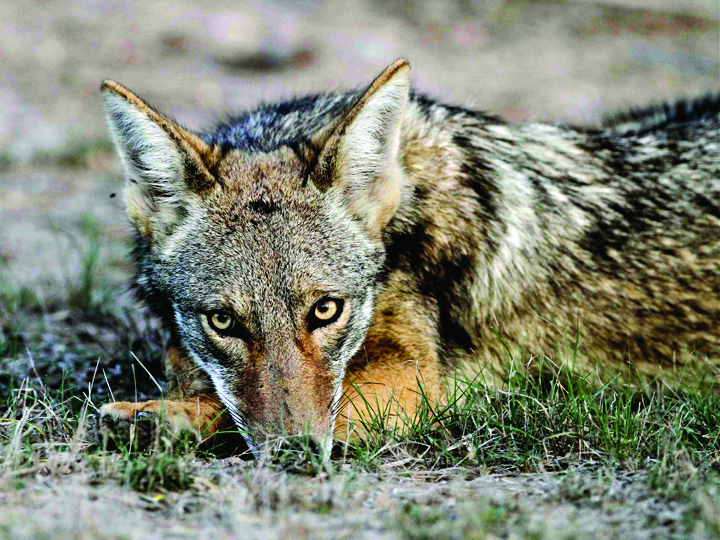
SP. As we walked we heard several Coyote
howls and yelps in the distance.
On the lawn close to the entrance gate, we found four Cotton-tail Rabbits, grazing under the lights close to thick brush, where they could safely watch for predators. While I registered us at the night check in post, my companions watched a raccoon under the Nature Center feeders, searching for scraps left by birds. The night was humid, and quiet, except for crickets chirping. We walked, following the paved road, with woodland either side growing right up to the road, our eyes and ears tuning in to the world of dark and quiet. Then we heard a low "who, who who" and the reply "who, whwhoo, woo".
It was a pair of Great Horned Owls (Buho Comun) calling. They sounded close by, but as we walked, they did not sound much closer. We must have been paralleling them. A gentle "who, who, who" that seemed too gentle for such a large predator, 22 inches tall, a wing span of almost four feet, weighing 50 ounces, heavy for a bird. They roost high in trees on brush lines or in woodland, from where they can survey their surroundings. These owls are brown with streams and spots, tawny face, and large ear-tufts, that one might imagine to be horns, but are only feathers.
On the lawn close to the entrance gate, we found four Cotton-tail Rabbits, grazing under the lights close to thick brush, where they could safely watch for predators. While I registered us at the night check in post, my companions watched a raccoon under the Nature Center feeders, searching for scraps left by birds. The night was humid, and quiet, except for crickets chirping. We walked, following the paved road, with woodland either side growing right up to the road, our eyes and ears tuning in to the world of dark and quiet. Then we heard a low "who, who who" and the reply "who, whwhoo, woo".
It was a pair of Great Horned Owls (Buho Comun) calling. They sounded close by, but as we walked, they did not sound much closer. We must have been paralleling them. A gentle "who, who, who" that seemed too gentle for such a large predator, 22 inches tall, a wing span of almost four feet, weighing 50 ounces, heavy for a bird. They roost high in trees on brush lines or in woodland, from where they can survey their surroundings. These owls are brown with streams and spots, tawny face, and large ear-tufts, that one might imagine to be horns, but are only feathers.
Step after step we listened to the "who, who,
who," as it faded behind us. Then it was again
only crickets that filled our ears. We could see
fairly well in the moon light, using a red flashlight
here and there for help. Red light protects
one's night vision, unlike white and other lights
that cause temporary loss, while one waits for
night vision to come back in.
In the distance we saw eyes, and discovered a skunk foraging on the short grass near the Resaca. We found two more skunks. At the bathrooms a light attracted moths, none unusual, but interesting none-the-less.
It was a cool night. The Dutch men wanted to see or hear an Eastern Screech-Owl (Autillo Yanqui). This is a small owl, 8.5 inches tall, weighing 6 ounces. It likes to roost in tree holes, but it does not hide, because tree holes are in short supply, and are sought out by many birds, and by squirrels. To protect its hole, it sits right in the entrance.
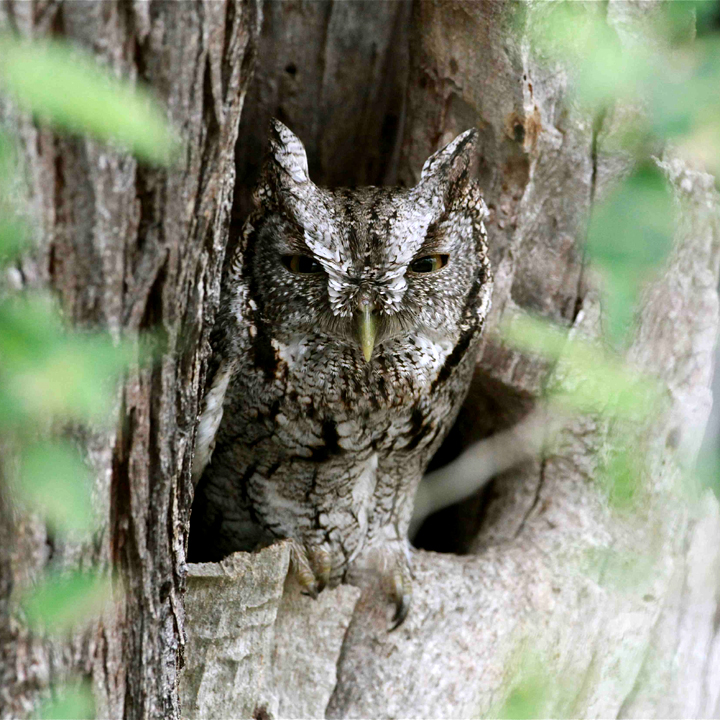
We knew of a hole that was recently taken by an Eastern Screech-Owl, and we were walking toward it. Eastern Screech-Owl is another woodland bird. It may be grey or reddish brown, with a very cute owl-face, and mottled coloration, very well camouflaged.
Suddenly we heard a low whinny, like a horse greeting, but lower and quieter. It was answered by another, and another.
Three Eastern Screech-Owls communicating back and forth. We listened, transfixed by the arrangement of calls. My companions were wide-eyed and listening intently. This was the
In the distance we saw eyes, and discovered a skunk foraging on the short grass near the Resaca. We found two more skunks. At the bathrooms a light attracted moths, none unusual, but interesting none-the-less.
It was a cool night. The Dutch men wanted to see or hear an Eastern Screech-Owl (Autillo Yanqui). This is a small owl, 8.5 inches tall, weighing 6 ounces. It likes to roost in tree holes, but it does not hide, because tree holes are in short supply, and are sought out by many birds, and by squirrels. To protect its hole, it sits right in the entrance.
We knew of a hole that was recently taken by an Eastern Screech-Owl, and we were walking toward it. Eastern Screech-Owl is another woodland bird. It may be grey or reddish brown, with a very cute owl-face, and mottled coloration, very well camouflaged.
Suddenly we heard a low whinny, like a horse greeting, but lower and quieter. It was answered by another, and another.
Three Eastern Screech-Owls communicating back and forth. We listened, transfixed by the arrangement of calls. My companions were wide-eyed and listening intently. This was the
moment they sought. They were thrilled, as
we took a side trail, seeking the owl roosting
hole. After checking a dark feeder, we found
the hole, but no owl.
One more skunk, more cotton tails, four more Eastern Screech-Owls and another Great Horned Owl rounded out the night for us.

On a warm night one may also see smelly Javelina, toads, many insects and stick insects, birds moving around, and night hawks, particularly Common Paraque, which sits in the middle of a road, watching the sky for flying insects. When it sees one, it jumps into the air and flies after it, nabbing its meal. At different times, two friends have seen Mountain Lion at night, though these are rare. In the early evening it is not unusual to see a Bobcat. Night walks are magical, and remind us that as humans we are the animals at a disadvantage, with our weak night vision, weak sense of smell, and weak hearing, compared to other night creatures. Enjoy the Valley's great birding hot spots, some of them at night. Bentsen RGV State Park can be reached at 956-585-1107 from 8 am to 4 pm.

Photo credits Steve Sinclair and Reid Allen
One more skunk, more cotton tails, four more Eastern Screech-Owls and another Great Horned Owl rounded out the night for us.
On a warm night one may also see smelly Javelina, toads, many insects and stick insects, birds moving around, and night hawks, particularly Common Paraque, which sits in the middle of a road, watching the sky for flying insects. When it sees one, it jumps into the air and flies after it, nabbing its meal. At different times, two friends have seen Mountain Lion at night, though these are rare. In the early evening it is not unusual to see a Bobcat. Night walks are magical, and remind us that as humans we are the animals at a disadvantage, with our weak night vision, weak sense of smell, and weak hearing, compared to other night creatures. Enjoy the Valley's great birding hot spots, some of them at night. Bentsen RGV State Park can be reached at 956-585-1107 from 8 am to 4 pm.
Photo credits Steve Sinclair and Reid Allen
Imagine living in the wilderness, today,
or thousands of years ago, foraging
off the land for food. In this situation a
person eats what he or she can kill, and
survives until they in turn perhaps become
a predator's food. In this world of
eat or be eaten, the smart folks would
listen and watch, using every survival
advantage possible.
Birds become a great ally in wilderness survival.
First, birds warn of danger. Birds watch each other. Each species has a danger signal. In the case of pigeons, it is the slap sound of their wings on takeoff. Their wing slap alerts every bird in the vicinity, and together they all startle and head for safety. For many birds it is a call. Watch and listen to the Northern Mockingbird, when it sees a stranger or a cat. It has a special warning call.
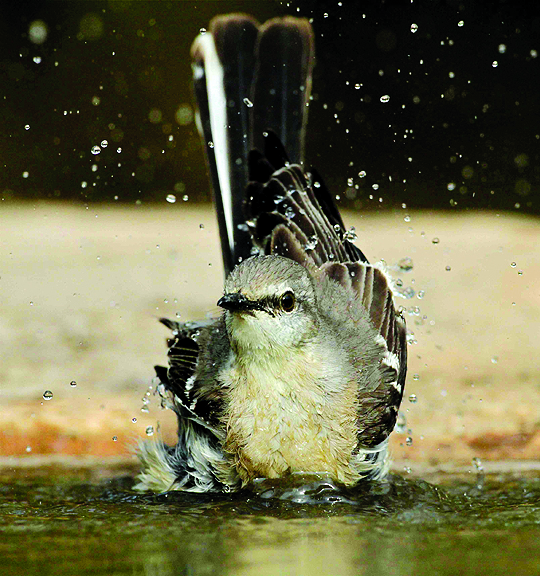
All the birds within earshot know there is a cat on the prowl. So the alert person listening to the birds and watching them can determine what they see and hear of danger. Since birds have great sight and can watch from on wing or perch high up, they typically see danger long before humans can do so.
Birds become a great ally in wilderness survival.
First, birds warn of danger. Birds watch each other. Each species has a danger signal. In the case of pigeons, it is the slap sound of their wings on takeoff. Their wing slap alerts every bird in the vicinity, and together they all startle and head for safety. For many birds it is a call. Watch and listen to the Northern Mockingbird, when it sees a stranger or a cat. It has a special warning call.
All the birds within earshot know there is a cat on the prowl. So the alert person listening to the birds and watching them can determine what they see and hear of danger. Since birds have great sight and can watch from on wing or perch high up, they typically see danger long before humans can do so.

Second, birds locate water. In a dry climate where water is needed for survival, birds keep track of water sources. Alert humans may find water by watching where birds go. Apart from the obvious puddles, birds may know of springs,ponds, and streams. Water birds, such as ducks, waders, shorebirds, and fishing birds such as Osprey and eagles, may signal the presence of substantial water when they are seen in an area.
Third, birds locate food sources. In any habitat one of the main tasks of birds is to forage for food. Some foods that birds eat are also good for humans, such as berries, grain, and fish. An alert human can save time and effort by watching where birds forage.
Fourth, when birds congregate, they attract predators, such as larger birds, and mammals. These predators may become food for humans, unaware that they are being stalked as they watch for a chance to grab a bird. Examples would be cats, coyote, and alligator.
Fifth, birds themselves represent a source of food for humans. One reason pigeons were kept in castles and monasteries was as an emergency or regular source of food. Providing a safe nesting area for pigeons meant having a regular source of food. Watching for bird roosts and tracking them also ensures access to them as food.
Sixth, birds eggs offer the highest
protein food available in the wild. It is
well-known that birds eggs are prized as
food, so watching for their nests also assures
food availability in nesting season.
Seventh, birds are a source of entertainment and reassurance that all is right with the world for many people. Watch Great-tailed Grackle behavior. It is fun to watch, as it no doubt also is to other grackles. Archeologists have unearthed grackle skeletons from around camp sites of early humans in North American from thousands of years ago. This indicates that grackles have been living close to humans for thousands of years, a happy co-existence.
Eighth, birds offer early warnings of a stranger's approach. Research shows that birds recognize the faces of people they know who live within that mockingbird's territory. However, when a strange human approaches, they typically issue a warning. Geese are well known as good watch dogs in farmyards. So in a world where strangers may not be trust worthy, birds can be trusted to warn of a stranger's approach.
Watching birds is more than fun.
It may be hard-wired into our brains for survival. It is a smart survival skill, it provides pleasure, entertainment, may be played as a game of identification and tracking, to keep humans alert. Bird watching may be as integral a part of us as is running, talking, and making dinner.
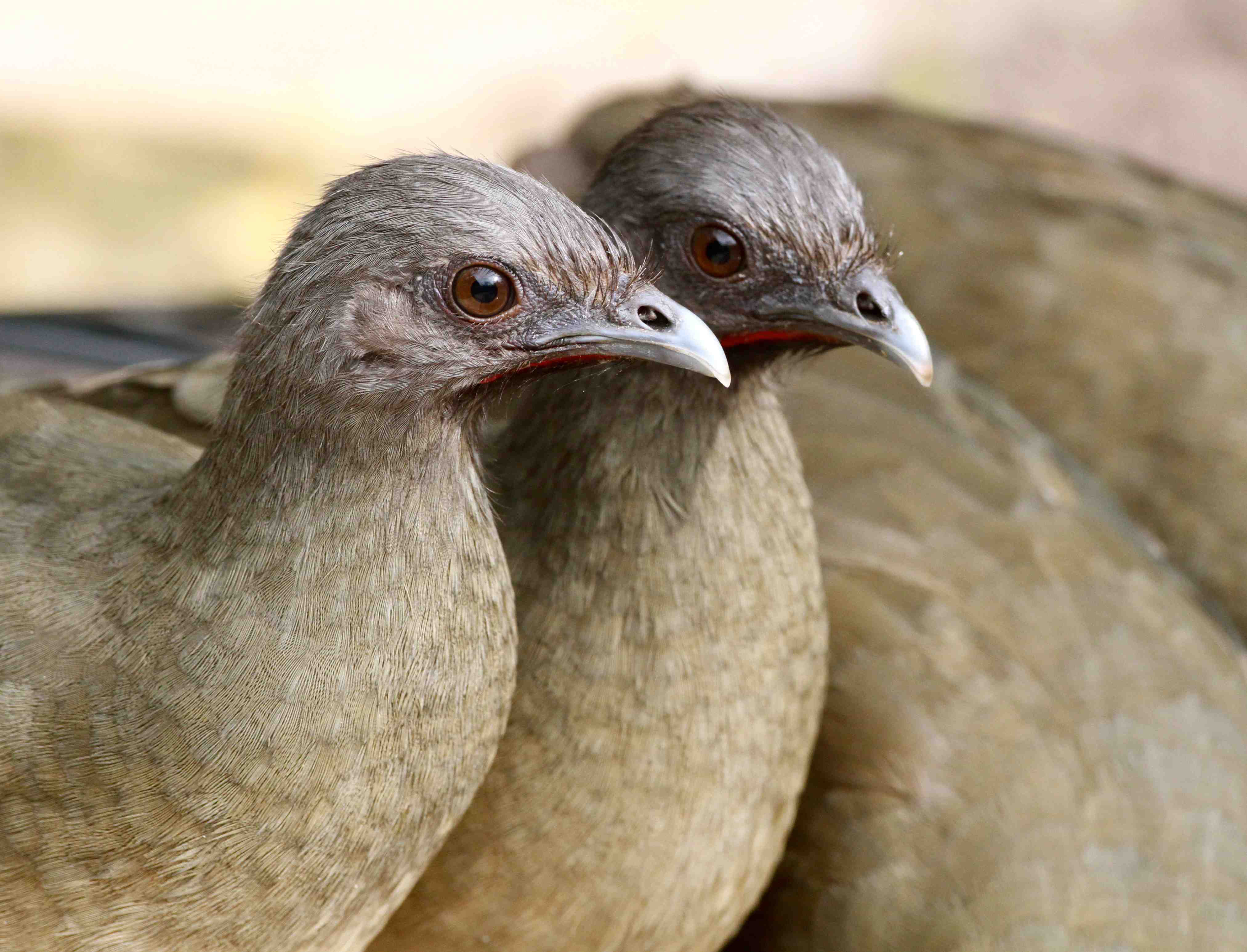
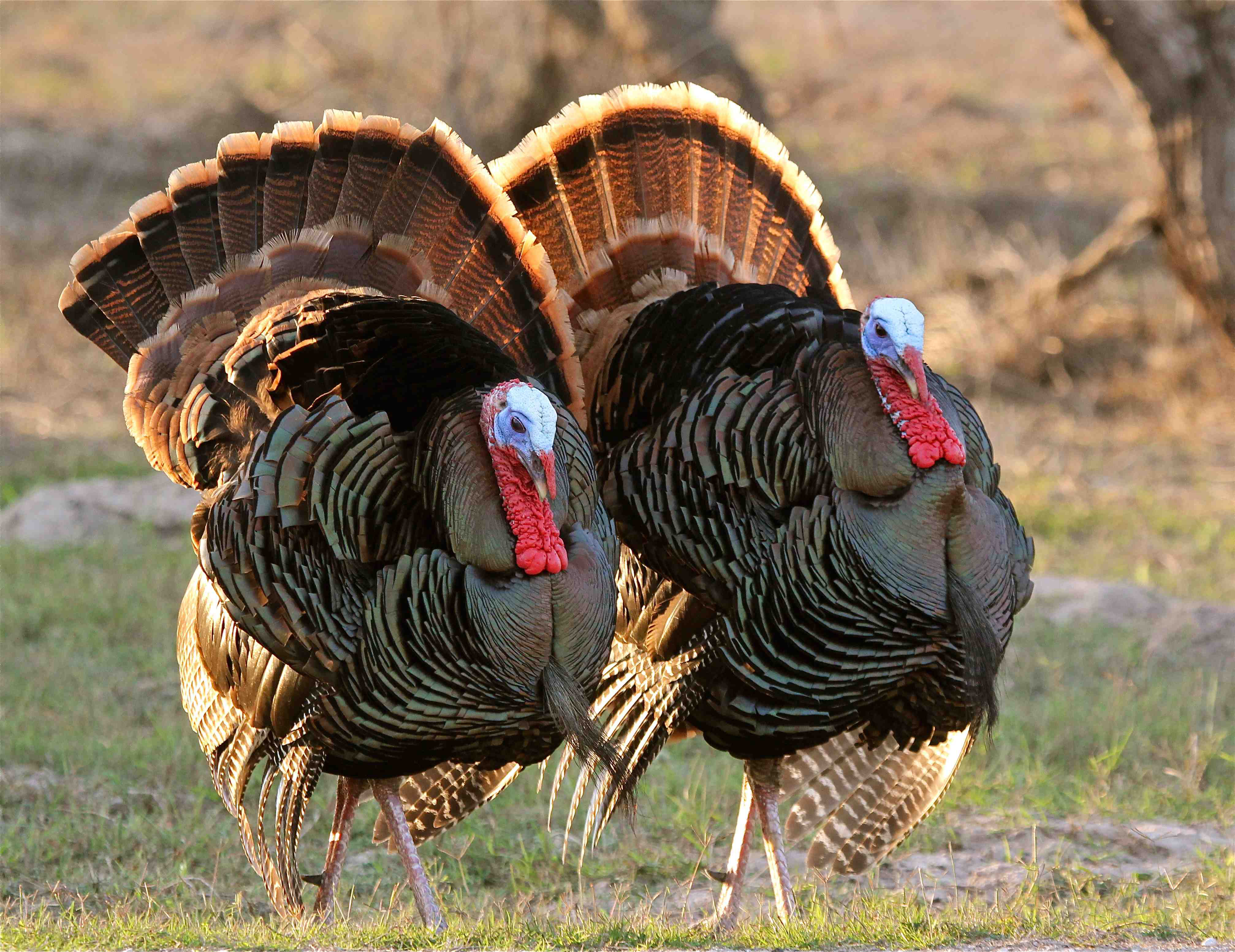
Seventh, birds are a source of entertainment and reassurance that all is right with the world for many people. Watch Great-tailed Grackle behavior. It is fun to watch, as it no doubt also is to other grackles. Archeologists have unearthed grackle skeletons from around camp sites of early humans in North American from thousands of years ago. This indicates that grackles have been living close to humans for thousands of years, a happy co-existence.
Eighth, birds offer early warnings of a stranger's approach. Research shows that birds recognize the faces of people they know who live within that mockingbird's territory. However, when a strange human approaches, they typically issue a warning. Geese are well known as good watch dogs in farmyards. So in a world where strangers may not be trust worthy, birds can be trusted to warn of a stranger's approach.
Watching birds is more than fun.
It may be hard-wired into our brains for survival. It is a smart survival skill, it provides pleasure, entertainment, may be played as a game of identification and tracking, to keep humans alert. Bird watching may be as integral a part of us as is running, talking, and making dinner.

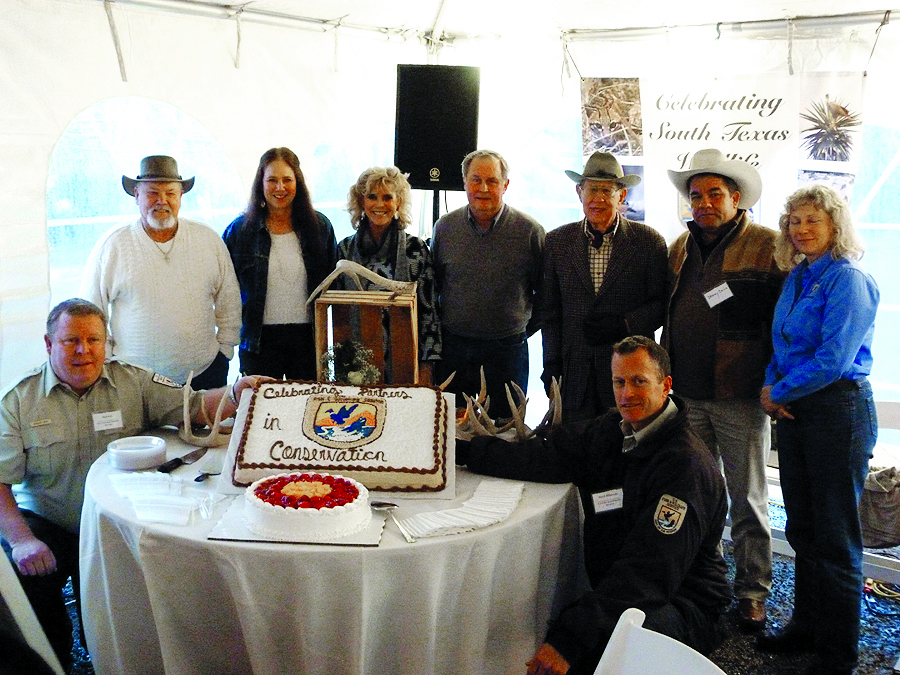
92 year old Frank Yturria speaks of his concern for the future of Valley wildlife
It was an unkind day, a blue norther stampeding through South Texas. The stalwart invited guests and officials sat in a tent erected for the occasion on the parking lot next to Laguna Atascosa National Wildlife Refuge Visitor Center. Temperatures read in the forties, but with the blasting icy wind it felt to everyone like the twenties.
The tent flapped violently and knocked over furniture items every so often, with loud bangs, causing everyone to look around nervously. We all shared one thought ... would the tent hold up, or blow away with us inside it. At the front of the tent officials turned on the microphone, and master of ceremonies, Rob Jess, Project Leader of the South Texas Refuges welcomed guests and staff, and announced dinner. People shuffled over to the buffet line, keeping a nervous eye on the shaking tent.
Sitting next to me and chatting about the Yturria family was Frank Yturria's assistant of twenty five years. He moved to the buffet line to make up a plate for Mr. Yturria.
I looked over at the 92 year old Patriach of Francisco Yturria's legacy, a legacy not only of land holdings, but really of the whole
Lower Rio Grande Valley. 1.2 million people are living here today because of the work of Frank's great grandfather.
Frank was wrapped up in a heavy over coat, with a scarf wound around his neck, wearing on his head a woolen European style hunting cap with ear flaps. He looked warm and comfortable, and was not the least perturbed by the wind, blowing rain, noise and challenging temperatures surrounding us. He seemed to see into another dimension, one of generations before him, and after him, all about the future of the Valley, of its people, its wildlife, and of course its land.
Francisco's financial legacy to his family was and today still is land. He left lots of land. Land his descendants still own. Land that the King Ranch and Kenedy Ranch still own that was purchased through Francisco's skilled negotiation. Counties of land. Land in Kleberg, Kennedy, Willacy, Cameron, Hidalgo, and Starr counties, and more elsewhere.
The Yturria family is all about land. And the future management of land to benefit Valley people and wildlife. The Yturria family have donated, sold, and transferred under conservation easement to the South Texas Refuges (Laguna Atascosa N.W.R. and Lower Rio Grande Valley N.W.R.) tens of thousands of acres of land. No one is sure exactly how much land. Frank Yturria wants the future of South Texas wildlife to be secured through land management for wildlife. This is part of the far sighted Yturria vision, planning for the future, planning with a hundred year horizon, just like his great grandfather could see a hundred years ahead.
Charro beans, rice, and meat, with
corn tortilla. Simple, tasty Valley food is
never better than when eaten outdoors,
even with a raging norther trying to flatten
our tent.
After dinner there were speeches from Regional U.S. Fish & Wildlife higher ups, from area bosses, and from South Texas Project Leader Rob Jess, from the previous South Texas Project Leader Kelly McDowell. There were awards given to the Friends of Laguna (Chair Dr Tom de Maar), Friends of the Wildlife Corridor (Chair Rick Ramke), to the Hunke's, and to other land owners who work with U.S. Fish & Wildlife.
Each of them spoke. It was a nice back and forth. Kind words about protecting wildlife. I waited. There was one person I really wanted to hear speak. Finally the award to Frank Yturria. He accepted it graciously. He spoke in a strong voice, reaching out above the stormy night, speaking across the generations. He spoke eloquently of the family concern for the future of Valley wildlife, and he corrected the record. Not 25,000 acres. No. "My brothers and sisters and I have transferred 26,000 acres of our land to U.S. Fish & Wildlife Service to protect wildlife through the South Texas Refuges".
It was cold. Frank had spoken. We all were ready to tackle the windy drive home. As the caterers packed up folks headed for their trucks. I watched Frank maneuver steadily through the gang of people who wanted his photo and to shake his hand. I really wanted to meet him. To tell him of the admiration in which I hold his great grandfather, and his family. But it was too cold, too late, and he did not know me.
By the time I reached my truck Frank was in his white van being driven out past the tent by his faithful assistant. I watched through my rear view mirror as his van faded into the night behind my truck. It was like watching history fading through the veil of time.
After dinner there were speeches from Regional U.S. Fish & Wildlife higher ups, from area bosses, and from South Texas Project Leader Rob Jess, from the previous South Texas Project Leader Kelly McDowell. There were awards given to the Friends of Laguna (Chair Dr Tom de Maar), Friends of the Wildlife Corridor (Chair Rick Ramke), to the Hunke's, and to other land owners who work with U.S. Fish & Wildlife.
Each of them spoke. It was a nice back and forth. Kind words about protecting wildlife. I waited. There was one person I really wanted to hear speak. Finally the award to Frank Yturria. He accepted it graciously. He spoke in a strong voice, reaching out above the stormy night, speaking across the generations. He spoke eloquently of the family concern for the future of Valley wildlife, and he corrected the record. Not 25,000 acres. No. "My brothers and sisters and I have transferred 26,000 acres of our land to U.S. Fish & Wildlife Service to protect wildlife through the South Texas Refuges".
It was cold. Frank had spoken. We all were ready to tackle the windy drive home. As the caterers packed up folks headed for their trucks. I watched Frank maneuver steadily through the gang of people who wanted his photo and to shake his hand. I really wanted to meet him. To tell him of the admiration in which I hold his great grandfather, and his family. But it was too cold, too late, and he did not know me.
By the time I reached my truck Frank was in his white van being driven out past the tent by his faithful assistant. I watched through my rear view mirror as his van faded into the night behind my truck. It was like watching history fading through the veil of time.
Creeping up behind a reclining bright green spring mesquite, I raised binoculars
and stared into the brown, scaly face of Big Mama, a huge alligator, reclined at
the edge of the pond.
 Its steely eyes appeared to be doing the math, estimating
my caloric value. Its stomach was rotund and its paws relaxed. Today it would
not chase me because it was full of waterfowl. Waterfowl are easier to catch than
humans. None-the-less, in my nervous state I imagined alligators discussing different
foods -- waterfowl, feathery and barely a mouthful; humans, soft on the
outside and crunchy on the inside, like a big candy bar, and quite satisfying.
Its steely eyes appeared to be doing the math, estimating
my caloric value. Its stomach was rotund and its paws relaxed. Today it would
not chase me because it was full of waterfowl. Waterfowl are easier to catch than
humans. None-the-less, in my nervous state I imagined alligators discussing different
foods -- waterfowl, feathery and barely a mouthful; humans, soft on the
outside and crunchy on the inside, like a big candy bar, and quite satisfying.
It was one of those warm spring days and I had heard rumors of alligators living in Weslaco, at a pond on the lower edge of a pasture, near the floodway. I had discovered one, so it was true. I turned back and sauntered across a waving grass plain, following the tracks of trucks from the past, back to the fence line and Old Blue, my battered transport.
When I roamed its abandoned farmland in 1998, who could have predicted the future of this area?
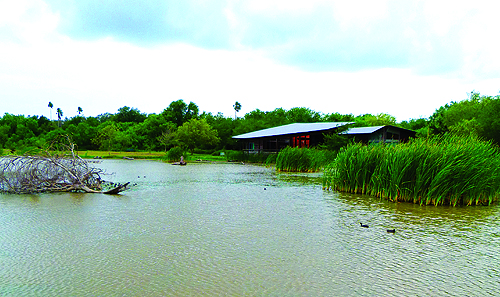
Its steely eyes appeared to be doing the math, estimating
my caloric value. Its stomach was rotund and its paws relaxed. Today it would
not chase me because it was full of waterfowl. Waterfowl are easier to catch than
humans. None-the-less, in my nervous state I imagined alligators discussing different
foods -- waterfowl, feathery and barely a mouthful; humans, soft on the
outside and crunchy on the inside, like a big candy bar, and quite satisfying.
It was one of those warm spring days and I had heard rumors of alligators living in Weslaco, at a pond on the lower edge of a pasture, near the floodway. I had discovered one, so it was true. I turned back and sauntered across a waving grass plain, following the tracks of trucks from the past, back to the fence line and Old Blue, my battered transport.
When I roamed its abandoned farmland in 1998, who could have predicted the future of this area?
native trees and bushes, and big bird's feet
leading the way to a path of large soft Mexican
brick. The path runs to a visitor center.
It leads folks through prime Valley butterfly
habitat. Native plumbago bushes with their
delicate white blooms line the path. Butterflies
flit ahead while others work nectar out
of flowers. Overhead mesquite, retama and
anacua shade the path. Brilliant red bougainvilla
blooms poke through the green
backdrop. Kiskadadee calls ring out above
and somewhere inside the brush something
stirs. It is probably a chachalaca.
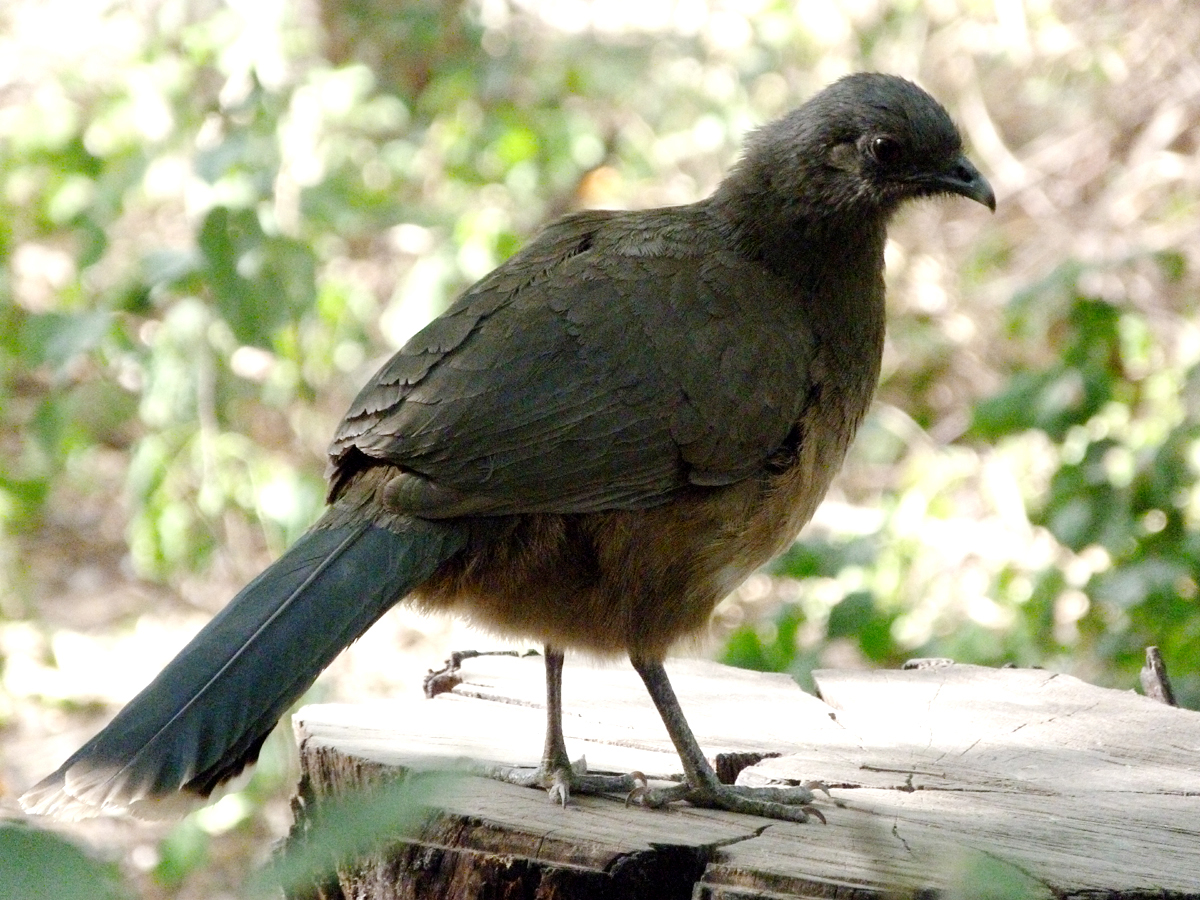 Round a bend in
the path and ahead is
the magnificent visitor center, a deck spread
with great vistas, picnic tables, shade, and a
cooling southerly breeze loaded with scents
of water and blossoms, a welcome experience
on a warm day.
Estero Llano Grande State Park is
its official name. It is famous for great
birding every day of the year. It also attracts
those rare vagrants that bring
birders flying in from across the U.S.
This past fall and winter a Greycrowned
Yellowthroat was a co-operative
resident for many weeks.
Other habitat has been added to Estero.
There is the Tropical Area, where tropical
trees, bougainvilla, and bright bushes survive
from its former life as a residential mobile
home park. Then there is Camp Thicket, with bungalows for special events, reminding
us that it was once a Methodist church
camp. The Thicket has woodland that has
never been cleared, providing insight into
the Valley habitat one hundred and fifty
years ago, and providing a great protected
reservoir for nesting birds.
Round a bend in
the path and ahead is
the magnificent visitor center, a deck spread
with great vistas, picnic tables, shade, and a
cooling southerly breeze loaded with scents
of water and blossoms, a welcome experience
on a warm day.
Estero Llano Grande State Park is
its official name. It is famous for great
birding every day of the year. It also attracts
those rare vagrants that bring
birders flying in from across the U.S.
This past fall and winter a Greycrowned
Yellowthroat was a co-operative
resident for many weeks.
Other habitat has been added to Estero.
There is the Tropical Area, where tropical
trees, bougainvilla, and bright bushes survive
from its former life as a residential mobile
home park. Then there is Camp Thicket, with bungalows for special events, reminding
us that it was once a Methodist church
camp. The Thicket has woodland that has
never been cleared, providing insight into
the Valley habitat one hundred and fifty
years ago, and providing a great protected
reservoir for nesting birds.
Round a bend in
the path and ahead is
the magnificent visitor center, a deck spread
with great vistas, picnic tables, shade, and a
cooling southerly breeze loaded with scents
of water and blossoms, a welcome experience
on a warm day.
Estero Llano Grande State Park is
its official name. It is famous for great
birding every day of the year. It also attracts
those rare vagrants that bring
birders flying in from across the U.S.
This past fall and winter a Greycrowned
Yellowthroat was a co-operative
resident for many weeks.
Other habitat has been added to Estero.
There is the Tropical Area, where tropical
trees, bougainvilla, and bright bushes survive
from its former life as a residential mobile
home park. Then there is Camp Thicket, with bungalows for special events, reminding
us that it was once a Methodist church
camp. The Thicket has woodland that has
never been cleared, providing insight into
the Valley habitat one hundred and fifty
years ago, and providing a great protected
reservoir for nesting birds.
Estero offers many different habitats in
its 230 acres, resulting in its supporting
many different families of birds, and Estero
is small enough to comfortably walk
its length and breadth. One can see raptors,
flycatchers, waders, ducks, doves, and
migrants. Behind the visitor center there
are hummingbird feeders that attract great
hummers, and more native butterfly plants
popular with butterflies. Estero is well
known as the go-to place for spotting Common
Paraque, a night flyer that roosts in leaf
litter during the day, and forages for insects
at dusk and dawn. Walks lead by Estero's
knowledgeable and popular naturalists are
offered throughout the year, and are highly
recommended by visitors.
 Oh, by the way, during Estero's development,
the original pond with its alligators
was enhanced,
and is a popular
destination in the
park, its resident
alligators happily
on site, with
posted warning signs to watch out for alligators,
especially Big Mama. This great
destination is aptly named Alligator Pond.
(photo credits: Keith Hackland)
Oh, by the way, during Estero's development,
the original pond with its alligators
was enhanced,
and is a popular
destination in the
park, its resident
alligators happily
on site, with
posted warning signs to watch out for alligators,
especially Big Mama. This great
destination is aptly named Alligator Pond.
(photo credits: Keith Hackland)
Oh, by the way, during Estero's development,
the original pond with its alligators
was enhanced,
and is a popular
destination in the
park, its resident
alligators happily
on site, with
posted warning signs to watch out for alligators,
especially Big Mama. This great
destination is aptly named Alligator Pond.
(photo credits: Keith Hackland)
Imagine digging clay out of the sticky Valley earth and fashioning
it into large bricks, laying these in the sun to dry, and then building
your dream home with them. Certainly the cost of materials would
be low, but what would it look like, and would it last? Could clay
mud like this withstand Valley wind, rain, and drought?
Yes, yes and yes. Not only was clay mud used in making some early lean-to homes, it was used in constructing substantial buildings. Salineno Village in Starr County has examples of such buildings. So does McAllen. The 10,000 square foot mansion at the heart of McAllen's show piece, Quinta Mazatlan birding center, was designed and constructed of local, sun dried, clay bricks in the 1930s under the direction of owners, Jason and Marcia Matthews.
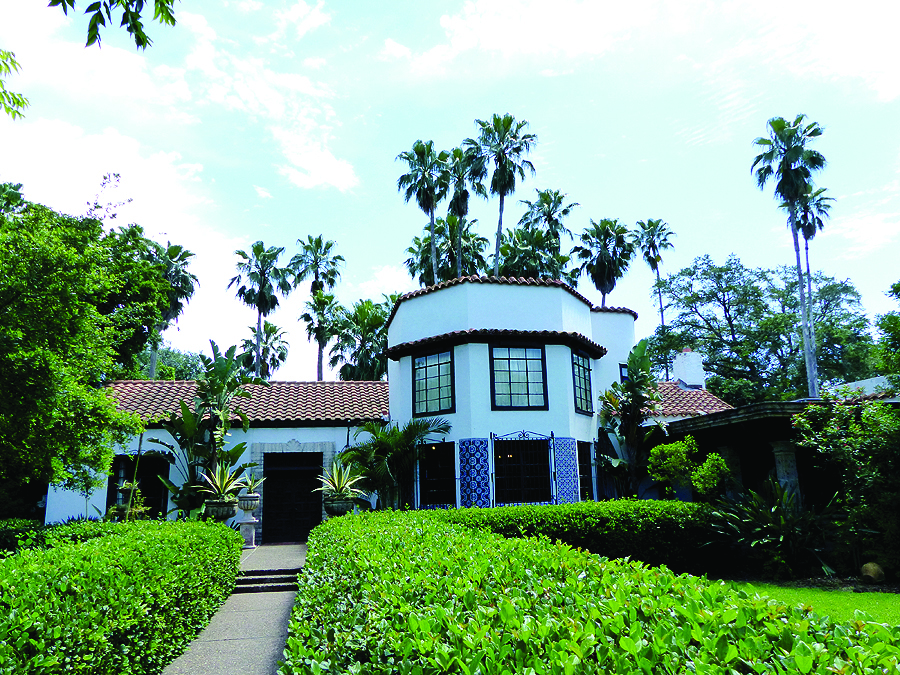
Today this Spanish Revival adobe hacienda is a museum quality show piece, set on a rise in a beautiful tropical park, surrounded by lush native woodland. The venue is so impressive that it rents for thousands of dollars as a venue for elegant weddings and photographic shoots. The most exciting cultural birding center in Texas, Quinta Mazatlan offers historical and cultural sights, displays artistic endeavors, the beauty of nature, and offers really great birding in a tropical park, set in the heart of the Valley's business center.
Yes, yes and yes. Not only was clay mud used in making some early lean-to homes, it was used in constructing substantial buildings. Salineno Village in Starr County has examples of such buildings. So does McAllen. The 10,000 square foot mansion at the heart of McAllen's show piece, Quinta Mazatlan birding center, was designed and constructed of local, sun dried, clay bricks in the 1930s under the direction of owners, Jason and Marcia Matthews.
Today this Spanish Revival adobe hacienda is a museum quality show piece, set on a rise in a beautiful tropical park, surrounded by lush native woodland. The venue is so impressive that it rents for thousands of dollars as a venue for elegant weddings and photographic shoots. The most exciting cultural birding center in Texas, Quinta Mazatlan offers historical and cultural sights, displays artistic endeavors, the beauty of nature, and offers really great birding in a tropical park, set in the heart of the Valley's business center.
Hurricane Beulah in 1967 tore the roof off the house, but left its mud brick walls largely intact. Frank and Marilyn Schultz purchased the run down site in 1968, reportedly for about $60,000. A businessman from Alamo, Texas, Frank Schultz had the foresight to see what Quinta might become, and he did important work to protect and restore the mansion.
When he auctioned it in the 1990s, the City of McAllen was the highest bidder, and bought the house and grounds for $2 million. Folks thought this purchase loco, a boon doggle, a waste of tax payer money, but McAllen Parks and Recreation Department, under its then director, Larry Pressler, embraced the opportunity, and with personal zeal Pressler launched its revitalization. He personally created a unique pathway through the site's native woodlands for bird viewing. He supervised work, and hired a top manager, Colleen Hook, who has since dedicated her substantial skills to fully restoring the mansion and expanding its impressive surroundings.
 Great management and
dedication transformed the relic into relevance.
Today the center offers regular events relating
to birds and arts, is a busy McAllen tourism
destination, and has really great birds.
Great management and
dedication transformed the relic into relevance.
Today the center offers regular events relating
to birds and arts, is a busy McAllen tourism
destination, and has really great birds.
Valley specialty birds seen at Quinta are
tame, used to people with binoculars and
scopes staring at them and digiscoping them.
With its many feeders and water points, its
great nesting sites, and thick brush, birds thrive
here, and visitors are rewarded with excellent,
close views. These are sophisticated city birds.
I once caught a bird with a smart phone taking
selfies, for Quinta Mazatlan birding center on
facebook.
In addition to very tall living palms growing on site, dead palms have been added to offer nesting sites for woodpeckers, starlings, owls, parakeets, and parrots. Common Paraque are often seen roosting in leaf litter, Olive Sparrow, Long-billed Thrasher, Curve-billed Thrasher, and even vagrant Brown Thrasher can be seen. Green Jay, Plain Chachalaca, Black-bellied Whistling-Duck, Altamira Oriole and Green Jay are commonly seen, and Quinta is great for migrant song birds fall and spring, one of its popular visitors being Tropical Parula. Wintering Orange-crowned Warbler, and Blackand- white Warbler frequent its woods. An introductory video created for Quinta Mazatlan by famous Valley nature videographer Richard Moore plays in the visitor center and provides a great introduction to its birds.
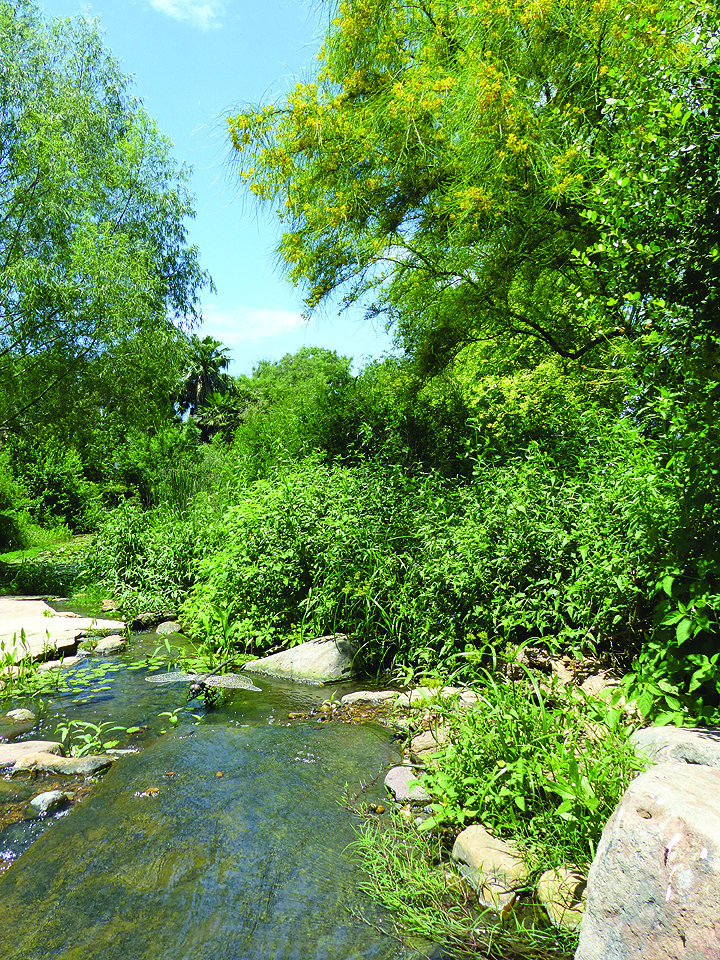
In addition to very tall living palms growing on site, dead palms have been added to offer nesting sites for woodpeckers, starlings, owls, parakeets, and parrots. Common Paraque are often seen roosting in leaf litter, Olive Sparrow, Long-billed Thrasher, Curve-billed Thrasher, and even vagrant Brown Thrasher can be seen. Green Jay, Plain Chachalaca, Black-bellied Whistling-Duck, Altamira Oriole and Green Jay are commonly seen, and Quinta is great for migrant song birds fall and spring, one of its popular visitors being Tropical Parula. Wintering Orange-crowned Warbler, and Blackand- white Warbler frequent its woods. An introductory video created for Quinta Mazatlan by famous Valley nature videographer Richard Moore plays in the visitor center and provides a great introduction to its birds.
If I had a money tree, unfurling green
dollars on each branch, would I nurture
it, and help it grow to produce more and
more green dollars?
You bet I would! Most folks would be thrilled to have a green money tree growing in their yard.
Well, there are several money trees growing in my yard. Almost every Valley yard grows money trees. The Valley is full of money trees. Our money trees here do not grow green dollars on each branch, instead they grow birds on each branch. Birds attract bird watcher tourists, people we call birders. Birders bring money with them and leave half a billion dollars a year here with us, spreading it around Valley businesses and birding destinations. We know this from a research study published by Texas A&M University (see www.southtexasnature.org, click on Nature Reports, then Economic Impact of Nature Tourism, and on pdf report Economic Impact of Nature Tourism).
Birders convert our trees into money trees, with their spending. But which trees are the money trees? They are typically trees native to the Valley. They have grown here for millenia, so are well adapted to Valley conditions of years of drought interspersed with wet tropical years. In particular, Anacua is very bird friendly, producing crops of yellow berries after rainfall. Other native Valley trees easy to grow and popular with birds for fruit, foraging, nesting, or roosting are Anacahuita Wild Olive, Blackthorn, Brazil, Catsclaw, Coma, Cedar Elm, Ebano, Hackberry, Huisache, Mesquite, Mexican Ash, Retama, and Tepehuaje.
While most of these money trees are available at Valley nurseries, it is amazing after rain to look around in the yard and find them growing on their own. Usually they have been planted by birds (from undigested seeds in their droppings). When they are small and short they are easy to transplant into a good location in our yard. These trees attract the birds we enjoy, and the birds that birders seek. But to complete the circle, how do we attract the birders, letting them know that we have great birds? The Valley is particularly successful in this skill.
You bet I would! Most folks would be thrilled to have a green money tree growing in their yard.
Well, there are several money trees growing in my yard. Almost every Valley yard grows money trees. The Valley is full of money trees. Our money trees here do not grow green dollars on each branch, instead they grow birds on each branch. Birds attract bird watcher tourists, people we call birders. Birders bring money with them and leave half a billion dollars a year here with us, spreading it around Valley businesses and birding destinations. We know this from a research study published by Texas A&M University (see www.southtexasnature.org, click on Nature Reports, then Economic Impact of Nature Tourism, and on pdf report Economic Impact of Nature Tourism).
Birders convert our trees into money trees, with their spending. But which trees are the money trees? They are typically trees native to the Valley. They have grown here for millenia, so are well adapted to Valley conditions of years of drought interspersed with wet tropical years. In particular, Anacua is very bird friendly, producing crops of yellow berries after rainfall. Other native Valley trees easy to grow and popular with birds for fruit, foraging, nesting, or roosting are Anacahuita Wild Olive, Blackthorn, Brazil, Catsclaw, Coma, Cedar Elm, Ebano, Hackberry, Huisache, Mesquite, Mexican Ash, Retama, and Tepehuaje.
While most of these money trees are available at Valley nurseries, it is amazing after rain to look around in the yard and find them growing on their own. Usually they have been planted by birds (from undigested seeds in their droppings). When they are small and short they are easy to transplant into a good location in our yard. These trees attract the birds we enjoy, and the birds that birders seek. But to complete the circle, how do we attract the birders, letting them know that we have great birds? The Valley is particularly successful in this skill.
We have a non-profit organization that specializes
in attracting birders. Formed in 2001,
South Texas Nature Marketing Co-op (STN)
is a non-profit supported by Valley Chambers
of Commerce, Convention & Visitors Bureaus,
Valley Cities, birding destinations and service
providers. It is unique in U.S., attracting birders
mainly in two ways.
Firstly, by hosting outdoor writers from all over the world, and showing them our Valley birds, restaurants, and culture. These writers typically have a great time and pen wonderful stories about the Valley and its birds in magazines, newspaper travel sections, and online, reaching tens of thousands of birders on each story. This attracts more birders here, often carrying the story with them in their luggage so they can follow the route recommended in the story.
Secondly, STN exhibits at bird festivals in U.S. and bird fairs in Europe. These events offer birder trade shows, lectures, and field trips, and are attractive to birders who travel, our Valley target market.
Over the past 13 years this work has been so successful that other birding destinations in Texas have joined to support our effort.
With the richest birding in the United States occurring in Texas, this has raised our exhibit profile, an exhibit we call Texas Birding, and made it easier to attract attention. With the richest birding in Texas being in the Valley, it has raised the Valley’s profile too, and made the Valley much more attractive, positioning us here as the richest birding location not just in Texas, but also in the United States. The Valley is number one in the U.S., and is in the top thirty birding spots in the world.
During the past year STN has exhibited at the following events:
British Birdfair, Great Britain, attended by 27,000 birders
Cape May Birding Festival, NJ, 3,000 birders
Rio Grande Valley Birding Festival, Harlingen, TX, 3,000 birders
Firstly, by hosting outdoor writers from all over the world, and showing them our Valley birds, restaurants, and culture. These writers typically have a great time and pen wonderful stories about the Valley and its birds in magazines, newspaper travel sections, and online, reaching tens of thousands of birders on each story. This attracts more birders here, often carrying the story with them in their luggage so they can follow the route recommended in the story.
Secondly, STN exhibits at bird festivals in U.S. and bird fairs in Europe. These events offer birder trade shows, lectures, and field trips, and are attractive to birders who travel, our Valley target market.
Over the past 13 years this work has been so successful that other birding destinations in Texas have joined to support our effort.
With the richest birding in the United States occurring in Texas, this has raised our exhibit profile, an exhibit we call Texas Birding, and made it easier to attract attention. With the richest birding in Texas being in the Valley, it has raised the Valley’s profile too, and made the Valley much more attractive, positioning us here as the richest birding location not just in Texas, but also in the United States. The Valley is number one in the U.S., and is in the top thirty birding spots in the world.
During the past year STN has exhibited at the following events:
British Birdfair, Great Britain, attended by 27,000 birders
Cape May Birding Festival, NJ, 3,000 birders
Rio Grande Valley Birding Festival, Harlingen, TX, 3,000 birders
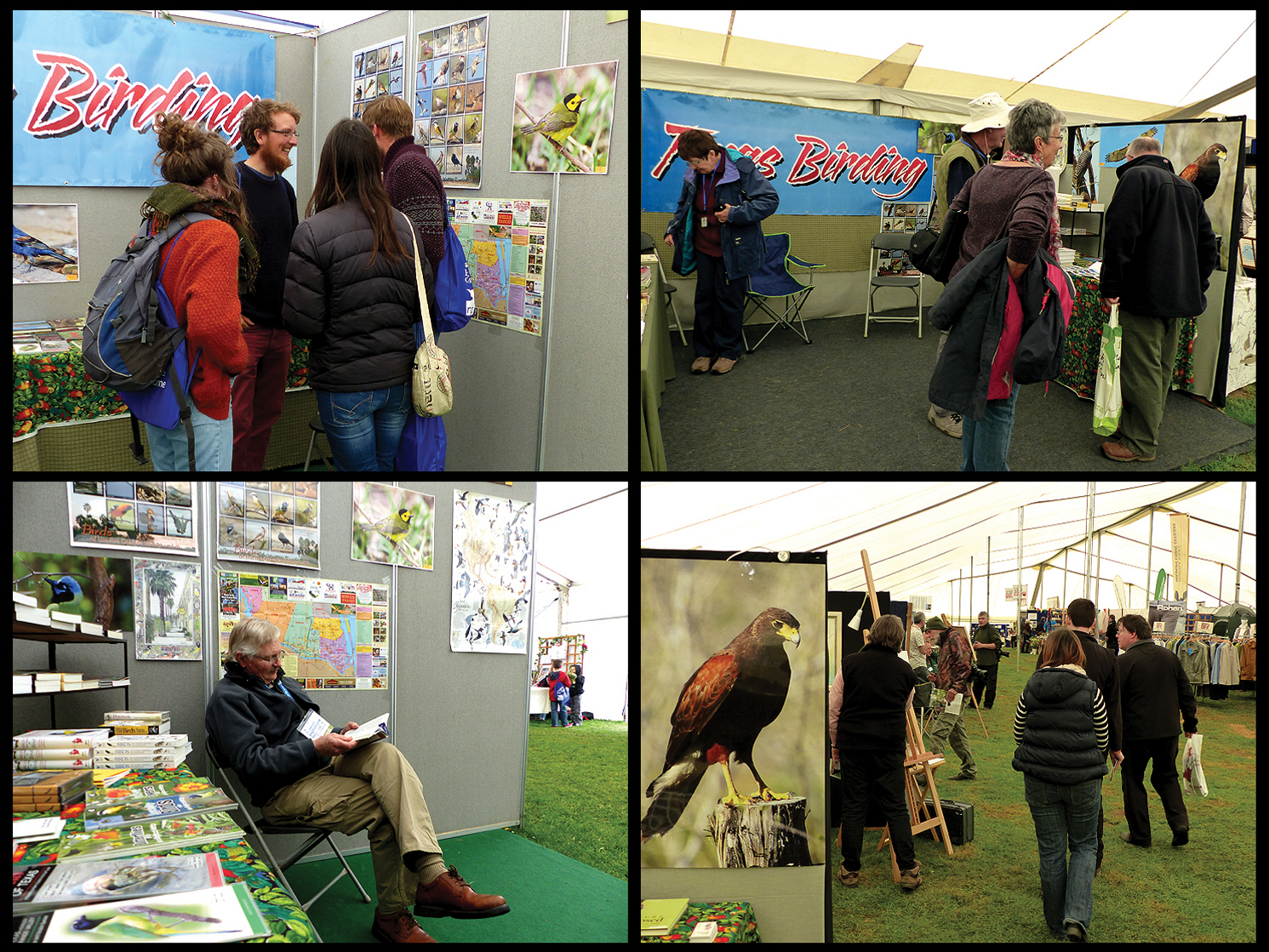
 Space Coast Birding Festival, FL,
5,000 birders
Space Coast Birding Festival, FL,
5,000 birders
Norfolk Birdfair, Great Britain, 2,500 birders
Scottish Bird and Nature Fair, Great Britain, 5,000 birders
Hamburg Birdfair, Germany, 2,500 birders
These events have reached an audience of 48,000 birders. Typically birders do not attend these events annually, but rather once in 3 to 5 years. So our audience there is largely new each year. The British Birdfair STN has worked since 2002, and the others we have exhibited at from 1 to 4 years.
Between the media and bird fairs coverage, STN has successfully grown the birder tourism in the Valley quite substantially, from my estimate of under $100 million a year in the 1990s to about $500 million currently.
There are other factors that attract birders to the Valley, in particular our great diversity of birds and of birding destinations, but that is another story, Locating Money Trees.
Next it would be great to find out how to benefit from this birding resource, and that is the following story, Tapping Into Money Trees.
There are plenty of birds everywhere in the Rio Grande Valley of Deep South Texas. Fall bird migration in the RGV runs from July to December. December through February are the most popular months with northern birders visiting South Texas. Like their feathered friends they migrate to the RGV to escape the frigid climate of the US northern sates and Canada. From March through May Spring birds are in a frenzy and so are spring birders. The Texas Great Coastal Birding Classic competition and the Texas Tropics Nature Festival both take place in March and April.